A Clinician's Vision: How Ajay Sooknah's Research Sparked Digital Transformation at PAHT
Following its successful launch at The Princess Alexandra Hospital NHS Trust (PAHT), Pathpoint ePOA has streamlined elective surgery workflows, marking a significant digital transformation in the Trust’s preoperative care standards.
The initial feedback from the implementation has been overwhelmingly positive, with pre-assessment teams and operational leadership expressing significant enthusiasm for the new system.
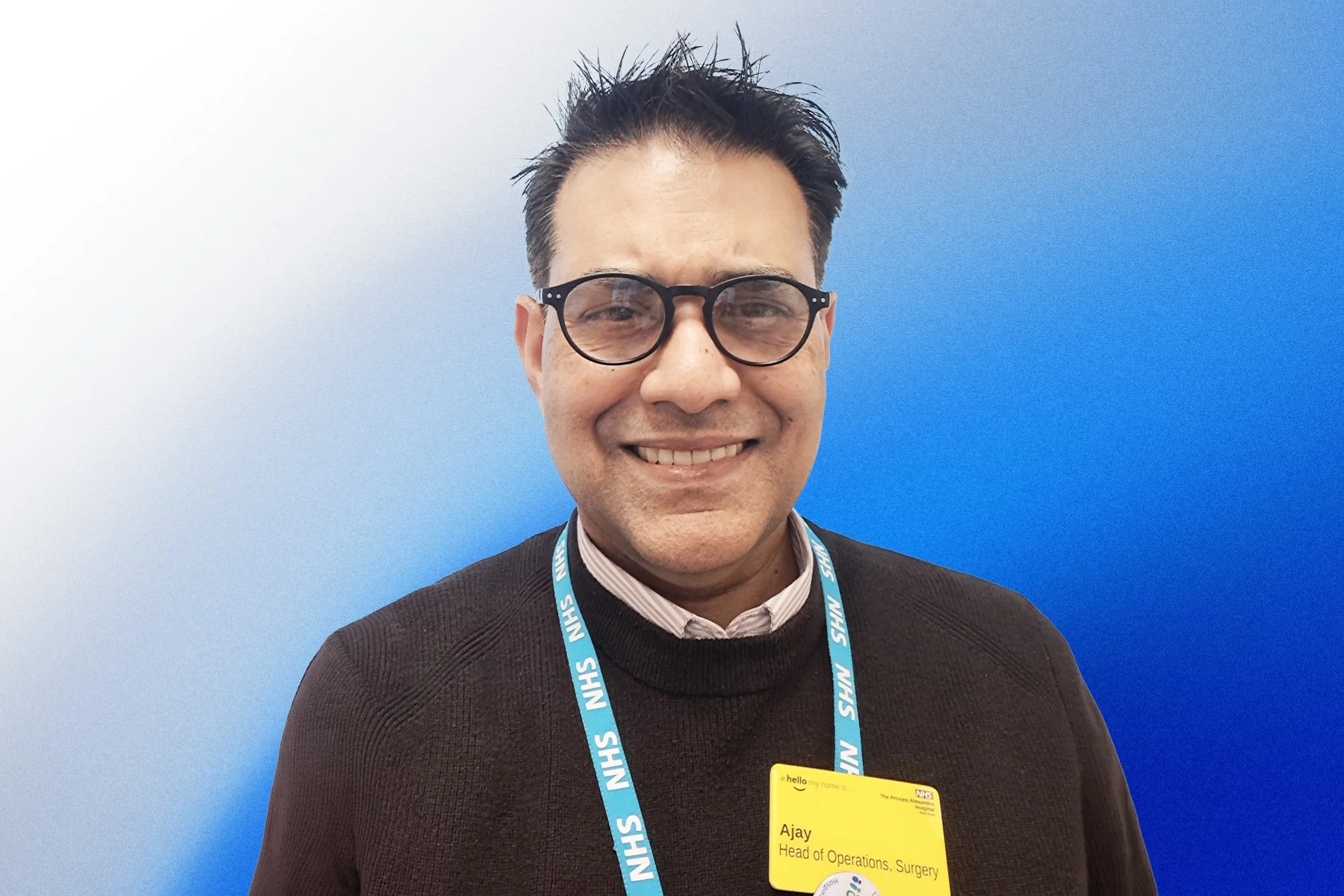
The shift from legacy processes to Pathpoint ePOA has been championed by Ajay Sooknah, Head of Operations, Surgery Division, at PAHT. With three decades of experience as a qualified nurse and ten years of experience as an Operating Theatre Manager, Ajay has witnessed first hand the multitude of reasons that have contributed to the elective backlog.
We spoke to Ajay about his extensive research which focused on understanding how best to solve inefficiencies in pre-operative care and his vision for implementing a digital preoperative assessment solution.
Understanding & Addressing the Challenges
Before starting his research, Ajay spent a great deal of time mapping out existing processes and understanding the challenges faced at the Trust. Historically, preoperative assessments (POA) relied entirely on paper based processes. Ajay reflected on this from his extensive years of experience in the service: “All paper based. So if you were doing phone consultations, you would have to ring every single patient and then document the notes on paper, which was not ideal”.
The core challenges faced by the PAHT preoperative team stemmed from the inability to see where patients are in their POA journey, limited potential for pre-habilitation, and late identification of patients with high-risk conditions. This was leading to poor theatre utilisation as a result of patients surgery being cancelled or delayed at the last minute.
Driven by a vision of an efficient preoperative process, Ajay aimed to identify inefficiencies and replace legacy processes. He had a vision for a patient and user centric process, enabled by the use of technology.
The Master’s Degree: How Can a Solution Transform Elective Care?
Ajay’s vision for a streamlined preoperative pathway guided his further studies. He undertook a Master’s degree, including a dissertation, focusing specifically on preoperative care and elective surgery, reflecting his passion for driving operational change.
The research proposal for a digital POA system was presented by Ajay to both the university and hospital’s ethics boards. Once approved, Ajay began his study titled “Harnessing Technology for Future Elective Digital Patient Pathway”. The aim of the study was to streamline the preoperative care process by introducing a digital solution that can reduce administrative burden on staff whilst improving patient experience.
Within a limited 12-week timeline, Ajay started a focus group with proposed stakeholders from various specialties. He set up tablets in a simulated environment to trial the digital POA, asking clinicians to fill in the assessments. Following positive feedback, Ajay then began the next stage of the project - collating feedback from a wider group of clinicians. Out of Ajay’s cohort, he achieved the highest marks for his research.
“The aim for me was to streamline the process by introducing a digital tool that can reduce the administrative burden of writing by hand. I did both a quantitative and qualitative analysis. As POA is very personal to a patient and very unique, we needed the qualitative data too. The expected outcome was to analyse how the proposed digital solution could provide clinical benefits, for example reduced cancellations”.
Ajay emphasised the importance of ‘prehabilitation’ in the patient journey to ensure the best outcomes for surgical recovery. He was keen to design a solution that would give clinical teams sufficient time to optimise patients for surgery, facilitating better surgical outcomes and patient recovery.
Aligning with National GIRFT Standards
Whilst searching for the right solution, Ajay ensured his goals were aligned with the ‘Getting it Right First Time’ (GIRFT) NHS England programme. GIRFT provides a standardised, evidence-based approach for improving care nationally.
“I joined the GIRFT preoperative assessment subdivision to see what we could contribute. Whilst doing my studies, I wanted to bring transformation and innovation and see how we can increase theatre efficiency and productivity while providing the safest patient pathway”. The goal was to leverage digital tools to not only improve administrative efficiency, but also reduce length of hospital stay (LoS) and enhance patient outcomes.
Enhancing Clinical Pathways with Pathpoint
Following on from his research, Ajay continued in his pursuit of finding the optimal digital solution and ultimately identified Open Medical. He presented the solution to the Trust’s board, including the Optimisation Board and Surgical Division Board.
This included a comprehensive analysis of the current challenges the Trust was experiencing, benefits of Pathpoint ePOA, safety parameters, training plans, and the overall functionality and potential that the new system could bring.
Once the system had been procured, Ajay’s enthusiasm for the project ensured a smooth transition to system use. With his extensive knowledge, prior research experience and passion for improving patient care, Ajay was the ideal system champion to lead this digital transformation project at PAHT.
“As for the project, we wanted to focus on preoperative care for adults, paediatrics and ophthalmology. The reason we chose those areas is because they have the highest patient volume and these areas had the most potential for impact”.
With the launch of Pathpoint ePOA at PAHT, the following features have propelled service delivery:
Automated screening:
Patients are now automatically sent a digital, GIRFT compliant, POA questionnaire via SMS or email, as soon as they are added to the waiting list. Patients can complete these at their own pace and from the comfort of their own homes, saving time and travel costs for patients by eliminating unnecessary hospital visits. Patients can also have carers or family help them complete the questionnaire. For the preoperative teams, there is a dedicated list to identify patients who have not yet responded, enabling an easier process to follow up with these patients.
Optimising patients early:
The questionnaire gives clinical teams information about the patient’s health and functional status as early as possible. The system uses a risk stratification algorithm to give a complexity score based on submitted responses, helping to identify patients who will require interventions before being ready for surgery.
Visibility of preoperative status:
Clinicians and admin staff can now see where patients are in the preoperative journey. There is a dedicated list for patients requiring escalation to the anaesthetists, allowing them to input their recommendations and review ongoing assessments. Additionally, the system creates a pool of patients fit-for-surgery, who can fill in theatre slots that become available last-minute.
Patient guidance:
Preoperative assessment staff are able to send patients pre-surgical instructions, as well as links to helpful resources from the Royal College Of Anaesthetists (RCoA) website, directly through the system.
Paving the Way for a Modern Elective Recovery
Through the adoption of early digital screening and the full digitisation of the preoperative pathway, PAHT is taking proactive steps to tackle the elective backlog. While clearing the backlog remains a long-term challenge, integrating intelligent solutions like Pathpoint ePOA represents a fundamental shift toward a more resilient, efficient, and patient-centred future.
“It has been an amazing journey, and I would like to especially thank the Open Medical team, who from day one came in to share their knowledge and experience on how we can integrate and deliver. It’s amazing to look at how this project was managed and how we’ve been able to deliver it in a very safe environment.”
Ajay Sooknah, Head of Ops Surgery Division
MSc, MBA, BSc (Hons), DMS, Dip HE, RGN
AO Adv Trauma ORP Chair