
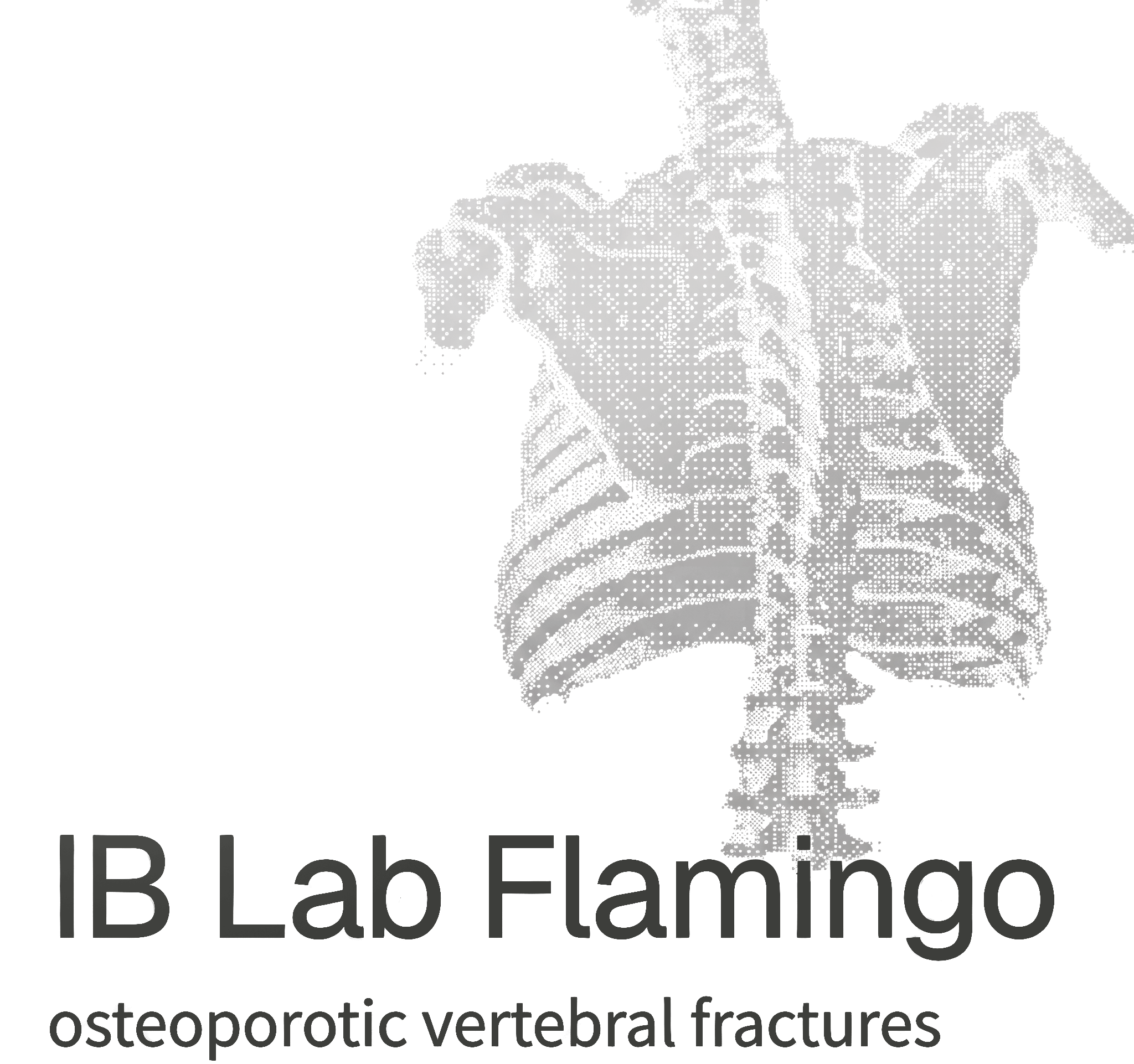
Closing Europe’s Osteoporosis Treatment
Gap with an AI-Enabled Platform.
Across Europe, there are an estimated 23.8 million people considered high risk for a life-changing fracture due to osteoporosis1. Effective treatments are available to reduce this risk, but only a few people receive this potentially life-saving care with around 71% of eligible women not currently receiving preventative care1.
Current health systems struggle to provide preventative osteoporosis care for a number of reasons, including:
We are tackling these problems by combining ImageBiopsy Lab’s FLAMINGO AI fracture detection with Open Medical’s clinical workflow platform, Pathpoint®. In doing so, we deliver an end-to-end digital Fracture Liaison Service (FLS) solution that automatically identifies at-risk patients and supports effective, guideline-adherent management of long-term care.
Through this project, we also support participating FLS sites in demonstrating their value to patients and their health systems.
The Research Team
🇬🇧 United Kingdom
A clinician-led, healthcare technology partner founded by practicing NHS
Project Lead
Open Medical is the team behind Pathpoint, an award-winning, multi-specialty, workflow engine designed for care coordination, AI orchestration and EPR optimisation. Trusted by more than 200 healthcare organisations worldwide, the platform transforms end-to-end clinical and operational pathways to deliver smarter, faster care.
🇦🇹 Austria
An award-winning MedTech in musculoskeletal (MSK) AI
Partner
Founded in 2016, IB Lab develops CE-marked and FDA-cleared AI-driven imaging intelligence that digitises bone health diagnostics. Their specialised MSK-AI platform operates across 100+ hospital sites in Europe and the US, standardising x-ray and CT image analysis to enable early disease detection and preventative care.
The Problem
The Clinical Challenge
71% Left Unmanaged
71% of European patients who suffer a fragility fracture are never treated for the underlying osteoporosis, leading to preventable secondary fractures and severe loss of independence.
85% Silent & Undetected
Up to 85% of vertebral compression fractures (VCFs) visible on routine CT scans are never formally reported or diagnosed, leaving high-risk patients entirely unnoticed.
The "Fracture Cascade"
A missed vertebral fracture dramatically increases the risk of a devastating secondary hip fracture within 1–2 years.
The Service Challenge
Manual & Fragmented Workflows
Current Fracture Liaison Services rely heavily on manual triage, fragmented communication, and siloed diagnostic systems. This leads to diagnostic delays, missed referrals, and lost patient follow-ups.
Administrative Overburden
FLS teams spend 30–60 minutes per patient on manual data collection and national audit reporting. This heavy administrative workload diverts valuable time away from direct clinical care.
The Infrastructure & Capacity Constraint
FLS teams are expected to prove their clinical and financial value before receiving the funding needed to build the digital infrastructure to do so. This leaves many services trapped without the data required to secure long-term investment.
Our Solution
An End-to-End, Closed-Loop FLS Pathway
Combining automated AI detection with executable clinical guideline orchestration to bridge the treatment gap.
2 DXA: Dual-energy X-ray Absorptiometry — a scan used to measure bone density.
Outcomes & Benefits
For Patients:
Early & Silent Detection: Identifies hidden spine fractures early, often before severe symptoms are felt using CT scans already being performed for other medical reasons.
Protecting Long-Term Mobility: Connects patients with timely, preventative bone care to protect physical strength, maintain independence, and lower the risk of severe future injuries like secondary hip fractures.
Clear, Connected Care: Ensures hospital scan results are automatically passed to specialists who can guide patients and families through simple testing and treatment options without unnecessary delays.
For Healthcare Services:
Automated Workflow & Triage: Seamlessly routes AI-flagged vertebral compression fractures directly into integrated FLS management software, eliminating manual search bottlenecks.
Reduced Administrative Effort: Drastically cuts manual data entry time for patient evaluations and simplifies national audit database reporting.
Actionable Health Economic Evidence: Provides participating pilot sites with an independent Health Economic Evaluation to build a validated, site-specific business case for long-term local commissioning.
Pan-European Impact & Economic Projections
Evaluating the broader clinical, societal, and financial potential of integrated FLS care across Europe
Current Evidence
VCF Flag Rate:
FLAMINGO automatically identifies and routes 91% of vertebral compression fractures (VCFs) from routine CT scans directly to a radiologist worklist or FLS pathway.
Treatment Initiation Rate:
Based on 1-year Pathpoint FLS cohort data, 90% of assessed, eligible patients enrolled in Pathpoint FLS initiated treatment.
Additional Patients Identified per Week:
A site running 3 CT scanners could identify between 7-14 additional high-risk patients per week.
Minutes Saved per Patient:
Pathpoint FLS saves 30–60 minutes of admin time per patient assessment and cuts national audit database submissions from 20 minutes per patient down to just 10 minutes a month.
How can you get involved?
Healthcare Organisations
We are actively seeking 4–7 European and UK hospital sites with active FLS pathways to join as live deployment partners. Participating sites receive fully funded access to FLAMINGO AI and Pathpoint FLS, complete onboarding support, and a site-specific Health Economic Impact report to support long-term local funding.
Patients, Carers & Public
We are inviting patients, carers, and community members to share their views and experiences through our Patient and Public Involvement workshops. By joining us, you will help design our patient-facing materials, improve how healthcare teams communicate with patients, and make sure fracture care always keeps patient needs first.
Societies, Leads & Charities
We are looking for clinical leaders, professional society representatives, and patient advocacy organisations to join the Project Advisory Board. As an advisory member, your insight will help guide the project’s strategic direction, exchange best practices, and support the future of digital osteoporosis care across Europe.




This project has received funding from the Eurostars-3 joint programme co-funded by the European Union's Horizon Europe research and innovation programme. The work was supported by national funding from Innovate UK and the Austrian Research Promotion Agency (FFG).
Company
Explore
CP House, 97-107 Uxbridge Road,
W5 5TL, London, United Kingdom
Zehetnergasse 6/2/2
1140 Vienna, Austria
© Open Medical Ltd